The Wheel of Life – Better Relationships with Love Cards

Develop your Relationships with Love Cards and other tools!
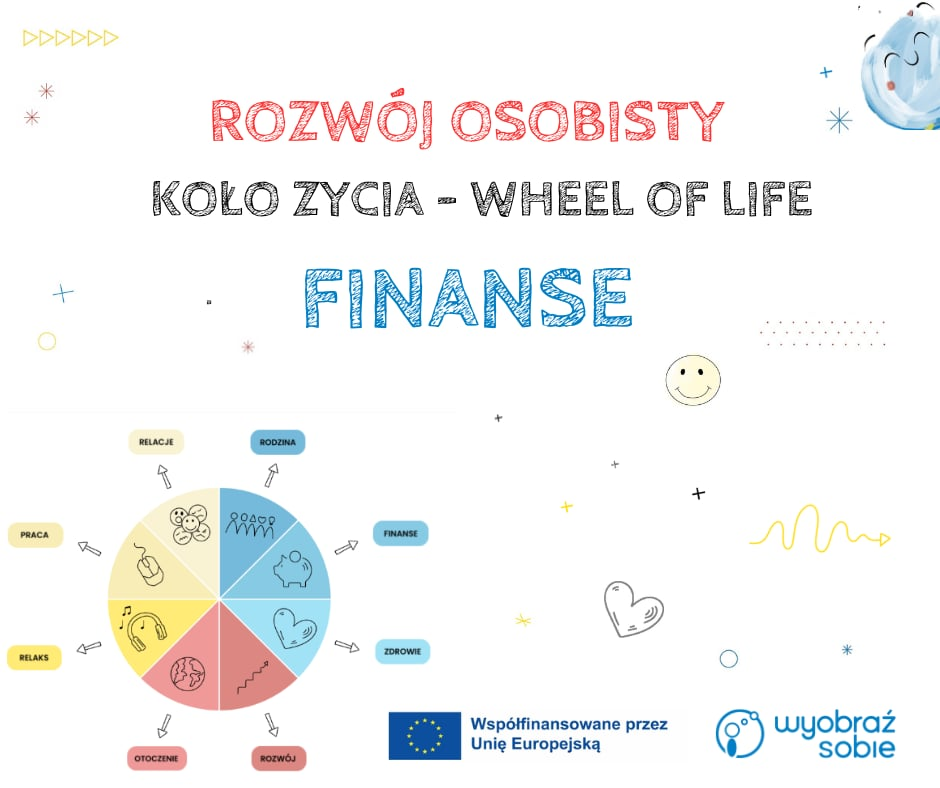
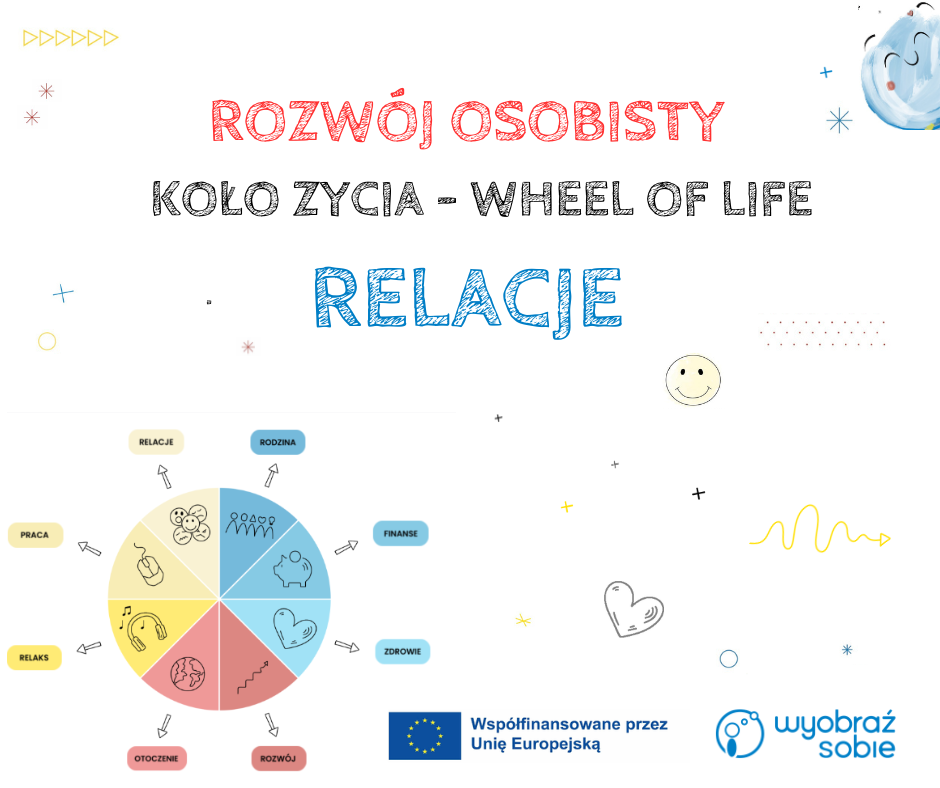
Fundacja Wyobraź sobie (Poland) in cooperation with Aspira (Slovenia) has launched the Erasmus+ project The Wheel of Life in the field of adult education. The aim of the project is to develop in-depth methods of work for each area of The Wheel of Life that the partners have chosen as relevant. Each month we focus on one area. In January we focused on Finance, and in February on Relationships, which we present in more detail in this article.
We ran an online workshop and two face-to-face workshops on relationships. The areas we touched on in more detail were:
1. Key elements of healthy relationships
Mutual respect, honesty, trust and communication are essential for healthy relationships. It is important that partners, friends or colleagues listen to each other, express their thoughts and feelings and accept differences. In healthy relationships, each individual maintains his or her autonomy while adapting to the other in a way that does not compromise his or her own values or needs.
2. Understanding needs
Each individual has needs in relationships that are important to recognise and express. Needs for closeness, security, respect, autonomy and connectedness are fundamental to relationship satisfaction. Often disagreements arise when we find it difficult to recognise our needs or fail to express them in a way that is understandable and acceptable to others.
3. The importance of emotions in relationships
Emotions play a key role in forming and maintaining relationships. They are an important source of information about what suits us and what bothers us. Although all feelings are legitimate, it is important to express them in a way that does not harm ourselves or others. Developing emotional literacy – the ability to recognise, express and regulate emotions – helps us to better understand ourselves and others.
4. Non-violent communication
Non-violent communication is a method that helps to express thoughts and feelings in a way that promotes understanding and empathy. It is based on four steps:
Observation – Describing a situation without value judgements or criticism.
Feelings – Expressing one’s own feelings in relation to a given situation.
Needs – Clarifying which need is associated with a particular emotion.
Request – A clear, positively worded request that can help to improve the relationship.
The use of NVC in everyday life helps to reduce conflict and improve connectedness between people.
5. Active listening
Active listening is a skill that requires focused presence and empathy. This means not interrupting, paying attention to the person’s words, non-verbal cues and tone of voice, and showing that you understand. Repeating key points, asking for clarification and expressing empathy are important elements of active listening that build stronger relationships.
6. Conflict management
Conflict is a natural part of any relationship, so it is important to be able to deal with it constructively. In private relationships, it is crucial to express our feelings and needs and to find common solutions. In professional relationships, it is important to maintain professionalism, communicate clearly and focus on common goals. It is crucial not to see conflict as a threat but as an opportunity to improve the relationship and find better ways of working together.
7. Tools
Love cards are a great tool for strengthening relationships, encouraging honest conversations, reflection and connection. Through thoughtful questions and challenges, they help couples deepen their understanding of each other, improve communication and express gratitude. Regular use of love cards can enhance intimacy, strengthen mutual trust and contribute to long-term harmony in the relationship.
Link to Love Cards: https://strefarozwoju.wyobrazsobie.org.pl/produkt/love-cards/
FOR YOU:
- IG profile of Jimmy_on_relationships (many reels): https://www.instagram.com/jimmy_on_relationships/
- The Power of Vulnerability TED talk by Brené Brown (The Power of Vulnerability and Connectedness): https://www.youtube.com/watch?v=iCvmsMzlF7o
- Hold Me Tight, book by Johnson Sue – A great book about building relationships, telling about 7 types of key conversations that can completely change our lives.
- Esther Perel is a world-renowned relationship expert. We recommend her podcast (https://www.estherperel.com/) and TED talk (https://www.ted.com/talks/esther_perel_rethinking_infidelity_a_talk_for_anyone_who_has_ever_loved)
- And one more TED talk! About the only person in the world you have to marry: https://www.youtube.com/watch?v=P3fIZuW9P_M&ab_channel=TEDxTalks
- A series of posts on building relationships prepared by Anna Książek and Andrea Pucci from Fundacja Wyobraź sobie. You will find posts about money, love languages, cultural differences, gender and many others: https://www.exchangetheworld.info/changemakers/categories/blog-en/our-relations (available also in Polish: https://www.exchangetheworld.info/changemakers/categories/blog-pl/nasze-relacje)
- Nonviolent Communication: the Language of Life book by Marshall B. Rosenberg (available also in Polish and Slovenian)
- Come as You Are book by Emily Nagoski (available also in Polish)
- 5 Languages of Love book by Gary Chapman (available also in Polish and Slovenian). Check out also the website https://5lovelanguages.com/.
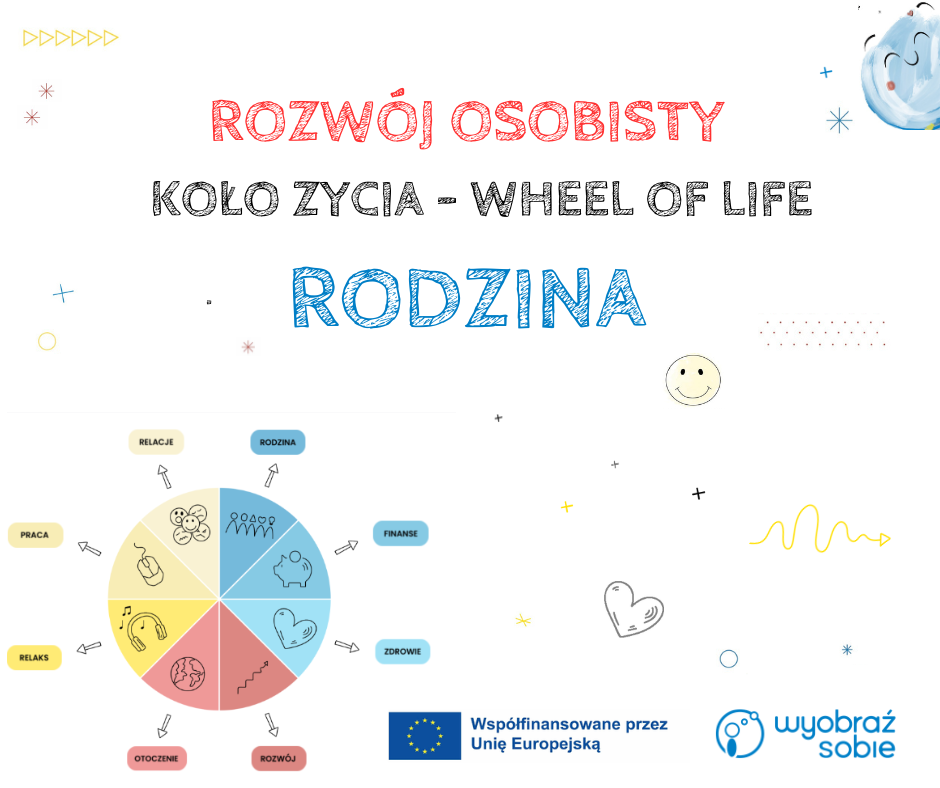
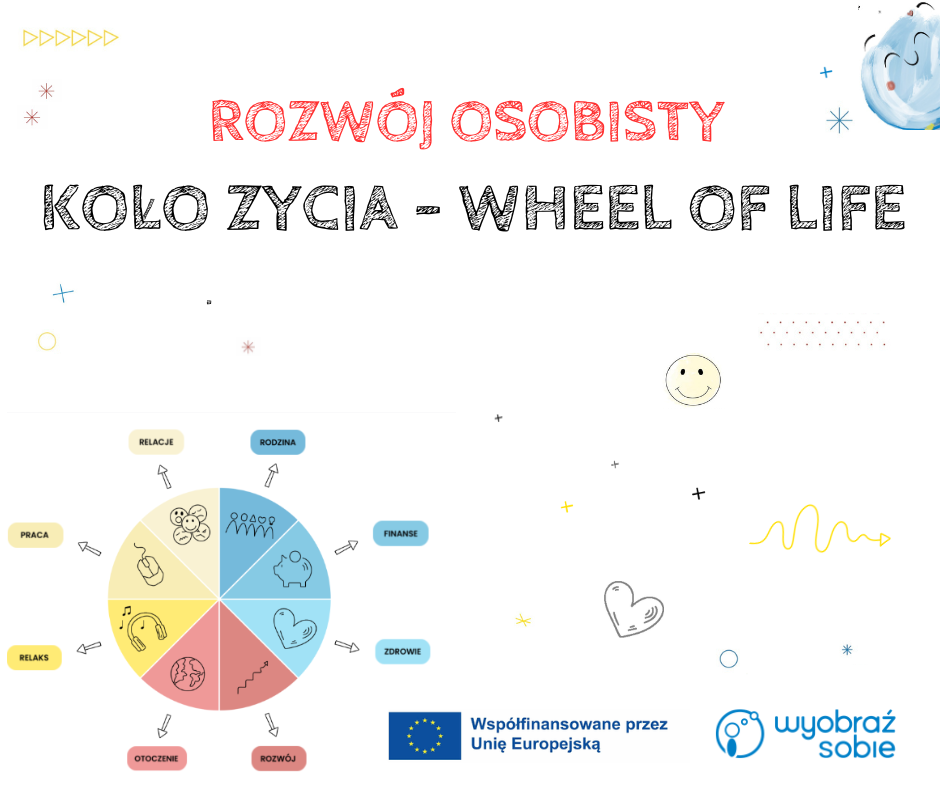
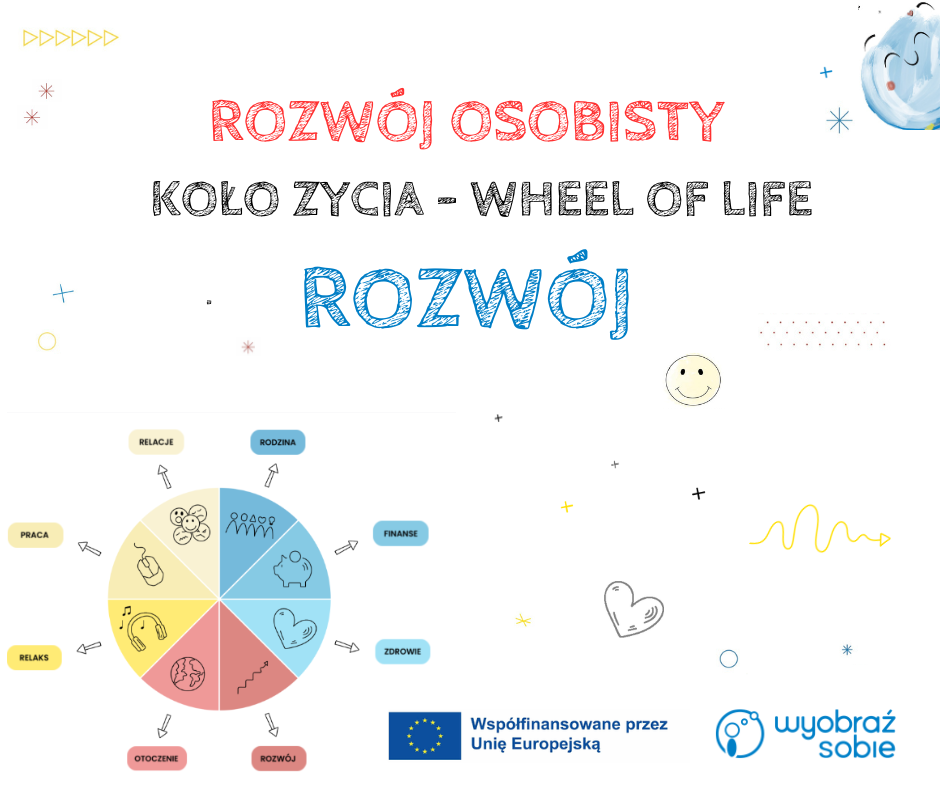
The Wheel of Life project is co-financed by the European Union. Its main objective is to prepare, test and share tools of holistic development for adult learners in 8 key areas: Family, Relationships, Work, Finances, Relax, Health, Environment, Self-Development.