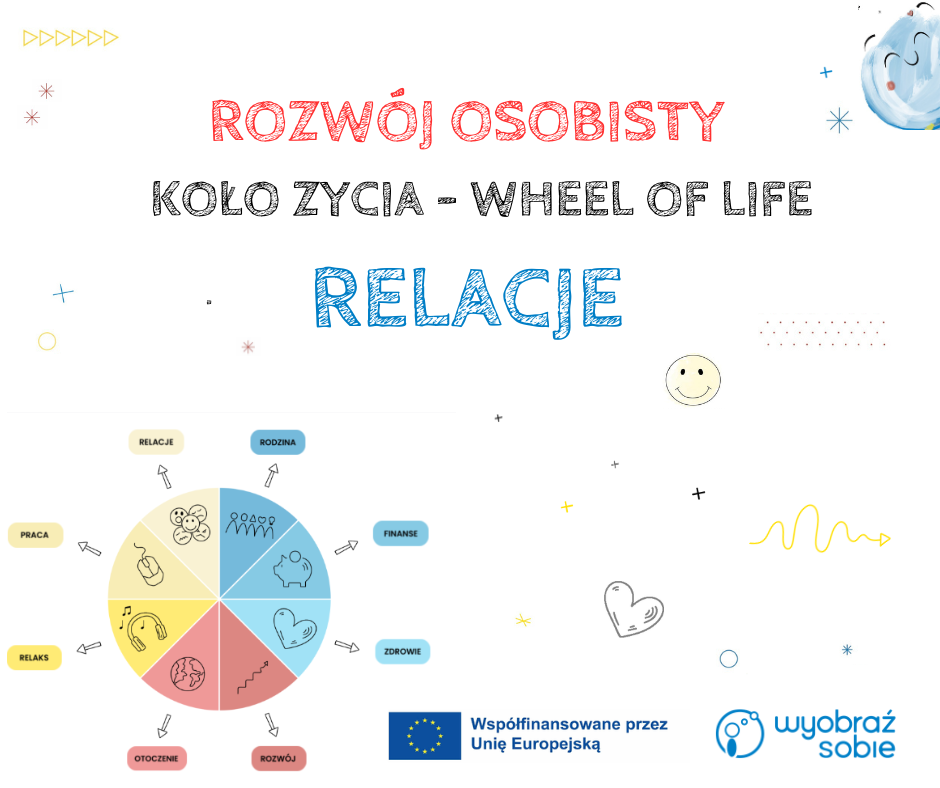
The Wheel of Life – Personal development

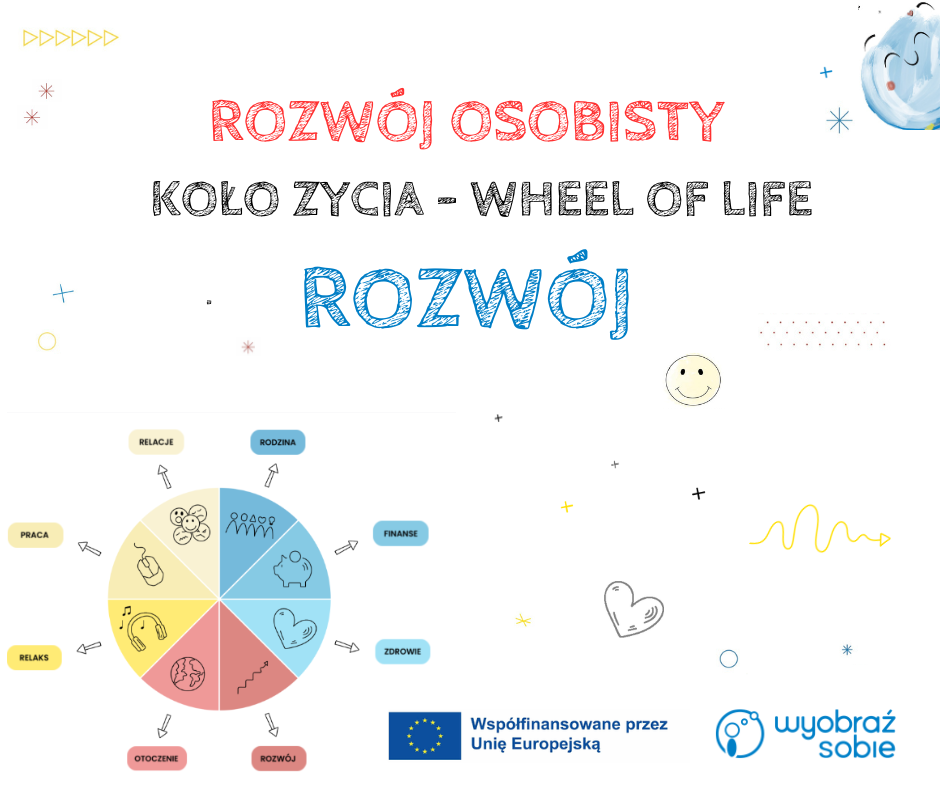
Personal Development for adults – check it out!
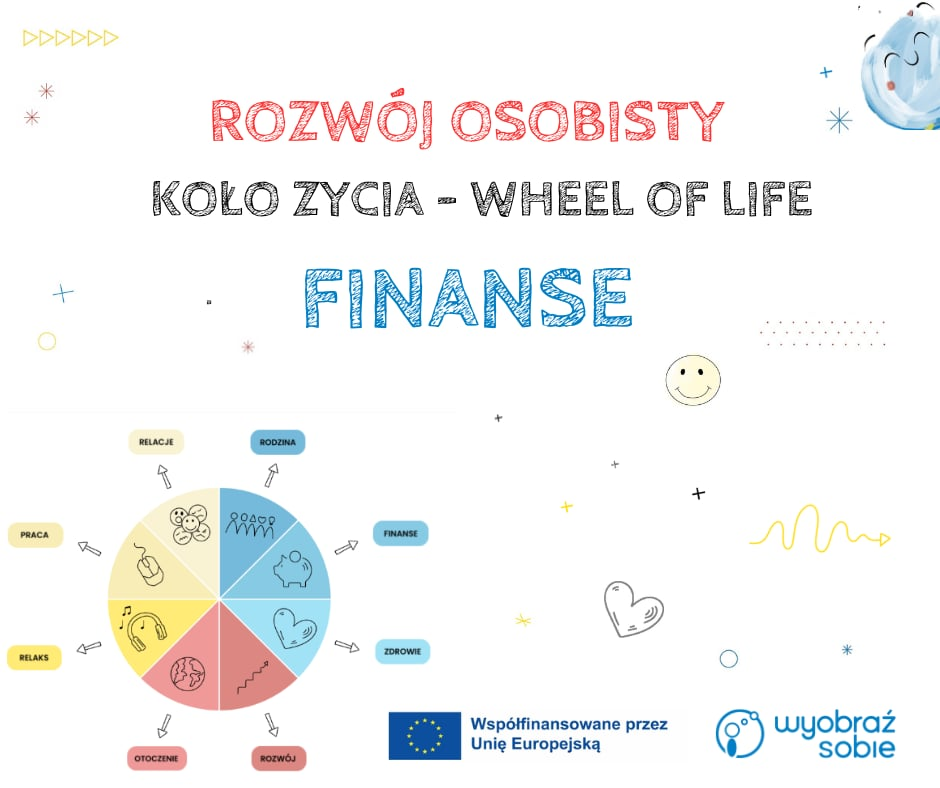
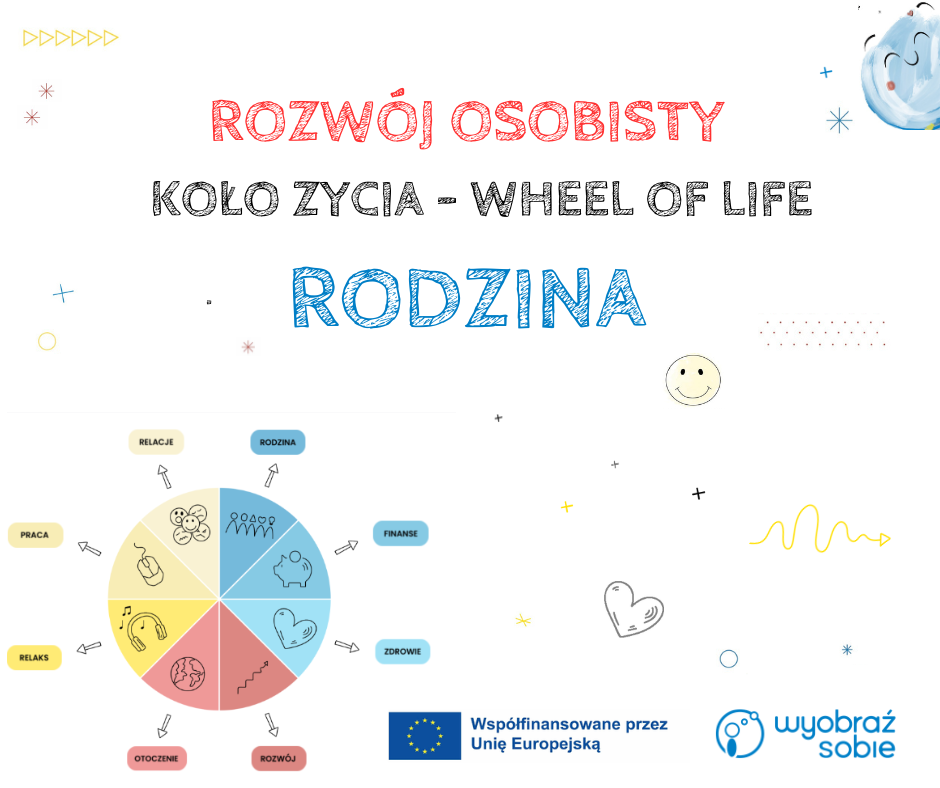
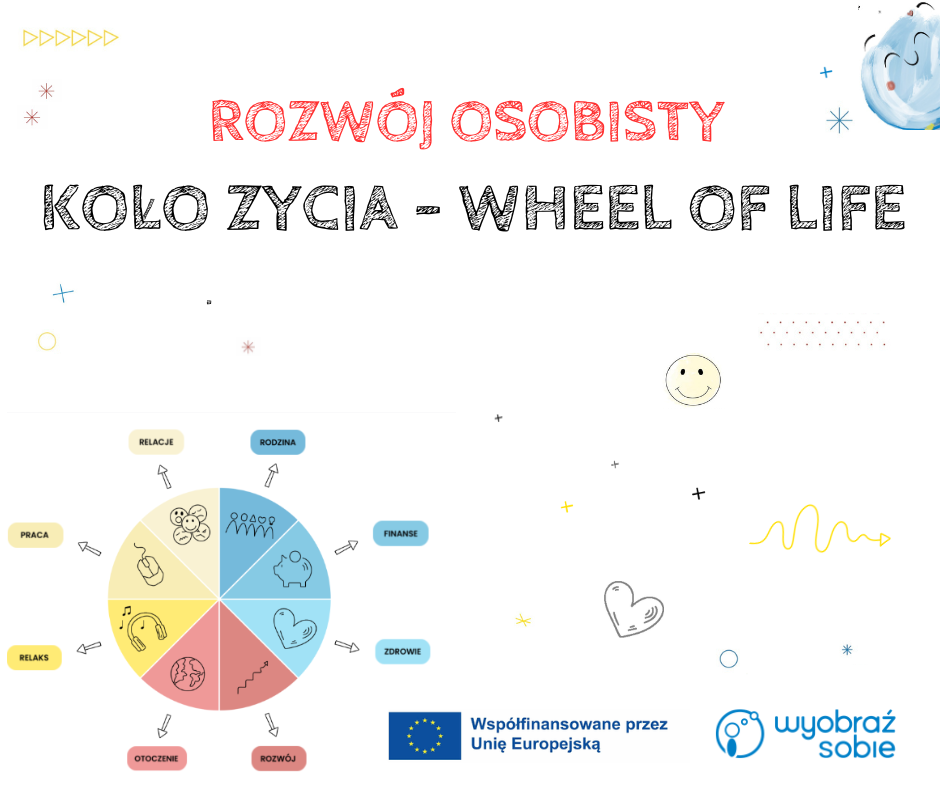
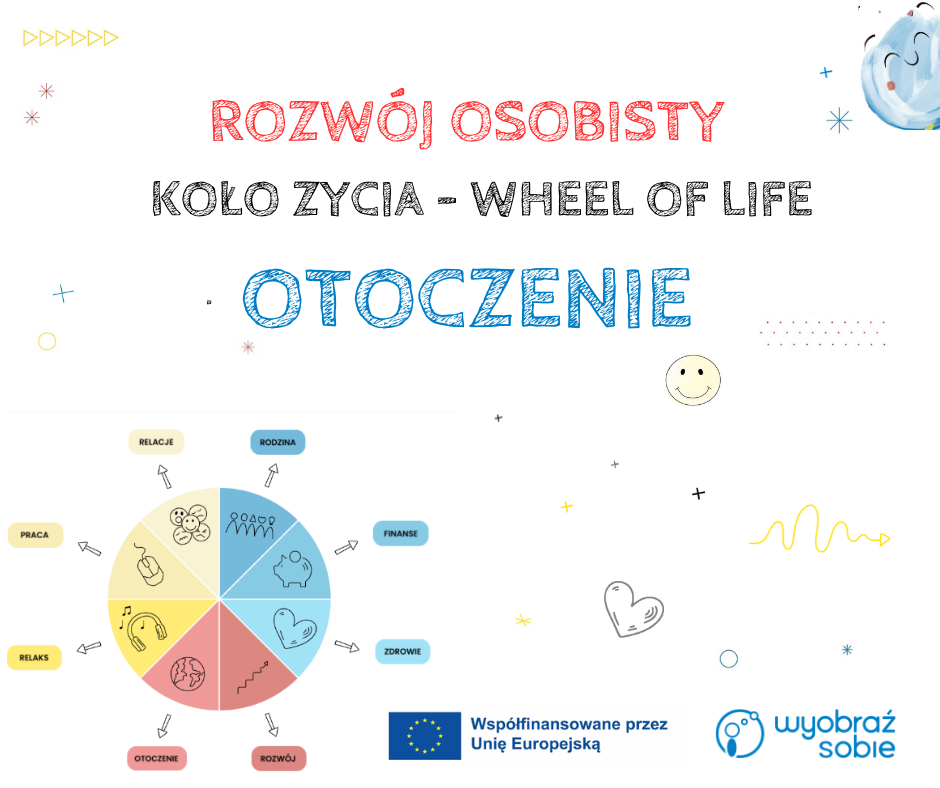
The Polish organisation Fundacja Wyobraź Sobie, in collaboration with Aspira from Slovenia, has launched an Erasmus+ project titled The Wheel of Life in the field of adult education. The goal of the project is to develop in-depth methods and approaches for working with various aspects of the Wheel of Life, with each partner selecting areas they find particularly relevant. Each month, the project focuses on one specific area:
- In January, the focus was on Finance.
- In February, we explored Relationships.
- March was dedicated to Health, and
- In April, we focused on Family.
- In May, we focused on Work.
- In June, we focused on the Environment.
- In July, we focused on Relaxation.
- In August, we focused on Personal Development.
To explore the topic of Personal Development, we organised one online workshop and two in-person workshops.
WHY IS PERSONAL DEVELOPMENT SO IMPORTANT
Focusing on personal development is crucial because it forms the foundation on which we build all other aspects of life—from relationships to career and inner satisfaction. If we neglect it, we quickly slip into a routine where circumstances dictate our lives instead of us. Personal growth is not a luxury, but a necessity, as it allows us to consciously adapt to change, maintain inner stability, and develop potential that would otherwise remain untapped. Every investment in ourselves—in knowledge, habits, awareness, or goals—pays off in the long run in the form of a better quality of life, self-confidence, and a sense of purpose.
How to shape your life with habits, goals, passion, and flow
Our personal growth does not happen overnight; instead, it occurs through the small decisions we make every day. Habits, goals, passion, and moments of flow are four key building blocks that can lead us to a more conscious, creative, and fulfilling life. Each of these areas has its own role to play, but together they create a mosaic in which we can develop our potential and learn to enjoy the process.
Passion – the truth about inner fire
We often hear the advice: “Find your passion and follow it.” But the truth is much more nuanced. Passion is not always singular, clear, and eternal. Instead of feeling pressure to know what our purpose is right now, we can allow ourselves to explore. Passion often comes from practice – from trying things out, learning, and growing. It’s enough to follow our curiosity and let our interest grow into something more. Just as we grow and change, so do the things that inspire us. When we replace the pressure of “I must know” with the openness of “it is enough to explore,” we create space for truly authentic experiences.
Flow – when time loses its meaning
Flow is a state of complete immersion in an activity, in which you lose all sense of time and space. It is a moment when you are so present that thoughts of the past and future disappear. Flow occurs where meaning and challenge meet – the activity must be challenging enough to stimulate your focus, but at the same time meaningful enough to fulfil you internally. It is essential to recognise that flow is not a constant and unchanging phenomenon – it adapts to you. At different stages of life, you may find excitement in entirely different things. The key is to listen to your energy and allow it to guide you to activities that currently inspire, challenge, and calm you.
Forming new habits – the power of small steps
Your decisions today will shape your tomorrow. Habits shape our lives more than big one-off decisions. They are small actions that are repeated every day and slowly but surely shape our identity. Starting a new habit does not require iron willpower – it is much more essential to create an environment that supports us. The key to success is taking small steps, repeating them consistently, and exercising patience. Instead of imposing a whole plan of change on ourselves, it is enough to start with one action. As we repeat it, the story we tell about ourselves gradually begins to change. Habits are not a goal in themselves, but a means to become the person we want to be. A simple change in mindset—from “I have to” to “I choose”—can move us closer to the life we want every day.
Setting and achieving goals – the power of the GROW model
Without a clear plan, goals often remain just wishes. To achieve them, we need a structure that helps us maintain clarity and focus. One of the most effective methods is the GROW model:
- Goal: What do you really want to achieve?
- Reality: Where are you currently?
- Options: What paths can lead you to your goal?
- Will: What specific steps will you take?
The model enables us to break down large desires into manageable, achievable steps. It is essential to focus on one goal at a time, as clarity brings power. We can view the challenges that arise along the way as opportunities for learning and growth, rather than obstacles. And most importantly, we must start even when we don’t feel completely ready, because progress always happens along the way, not while waiting for the “right moment.”
Conclusion
Passion, flow, habits, and goals are closely intertwined. Curiosity leads you to what interests you, and from this, passion can be born. When you pursue activities that fulfil and challenge you, you enter a state of flow. With small but consistent steps, you form habits that support your identity. With clear goals set through the GROW model, you can guide your path. The biggest secret is that none of this requires perfection—it only requires openness to the process and the courage to take the first step.
FOR YOU:
- Atomic habits (https://www.youtube.com/watch?v=PZ7lDrwYdZc)
- GROW model (https://www.youtube.com/watch?v=1fbooiSh_bA&t=13s)
Slovene:
- Book “Atomske navade” (James Clear)
Polski:
- Książka “Atomowe nawyki” (James Clear)
- Artykuł https://instytutbennewicz.pl/blog/metoda-grow-w-coachingu-czym-jest/
- Artykuł https://strefapmi.pl/strefa-wiedzy/flow-czyli-stan-przeplywu-klucz-do-szczescia-w-zyciu-i-pracy/
The Wheel of Life project is co-financed by the European Union. Its main objective is to prepare, test, and share tools for holistic development among adult learners in eight key areas: Family, Relationships, Work, Finances, Relaxation, Health, Environment, and Self-Development.